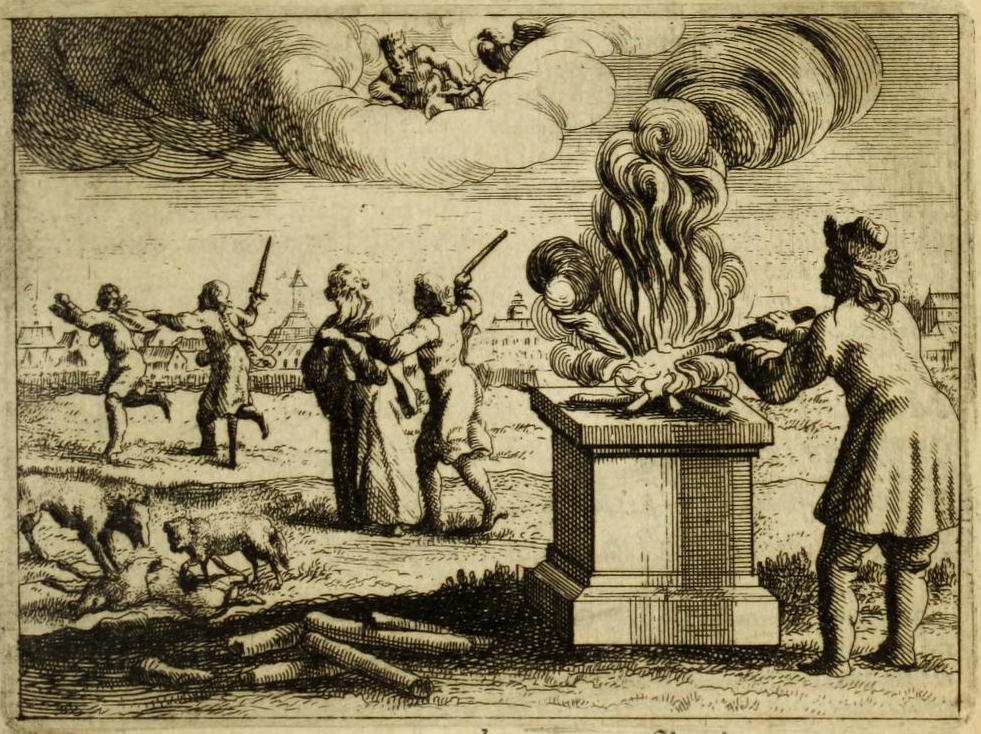
4.11. A THIEF PILLAGING THE ALTAR OF JUPITER. A Thief lighted his Lamp at the altar of Jupiter, and then plundered it by the help of its own light. Just as he was taking his departure, laden with the results of his sacrilege, the Holy Place suddenly sent forth these words: “Although these were the gifts of the wicked, and to me abominable, so much so that I care not to be spoiled of them, still, profane man, thou shalt pay the penalty with thy life, when hereafter, the day of punishment, appointed by fate, arrives. But, that our fire, by means of which piety worships the awful Gods, may not afford its light to crime, I forbid that henceforth there shall be any such interchange of light.” Accordingly, to this day, it is neither lawful for a lamp to be lighted at the fire of the Gods, nor yet a sacrifice kindled from a lamp.
No other than he who invented this Fable, could explain how many useful lessons it affords. In the first place, it teaches that those whom you yourself have brought up, may often be found the most hostile to you: then again, it shows that crimes are punished not through the wrath of the Gods, but at the time appointed by the Fates: lastly, it warns the good to use nothing in common with the wicked. [more info]
No other than he who invented this Fable, could explain how many useful lessons it affords. In the first place, it teaches that those whom you yourself have brought up, may often be found the most hostile to you: then again, it shows that crimes are punished not through the wrath of the Gods, but at the time appointed by the Fates: lastly, it warns the good to use nothing in common with the wicked. [more info]